Navaratna
Diamond / White Sapphire (Heera Stone)
The brilliant stone of Venus — beauty, love and material comfort.
4 pieces in stock now, from ₹16,128.
Buy Diamond / White Sapphire online
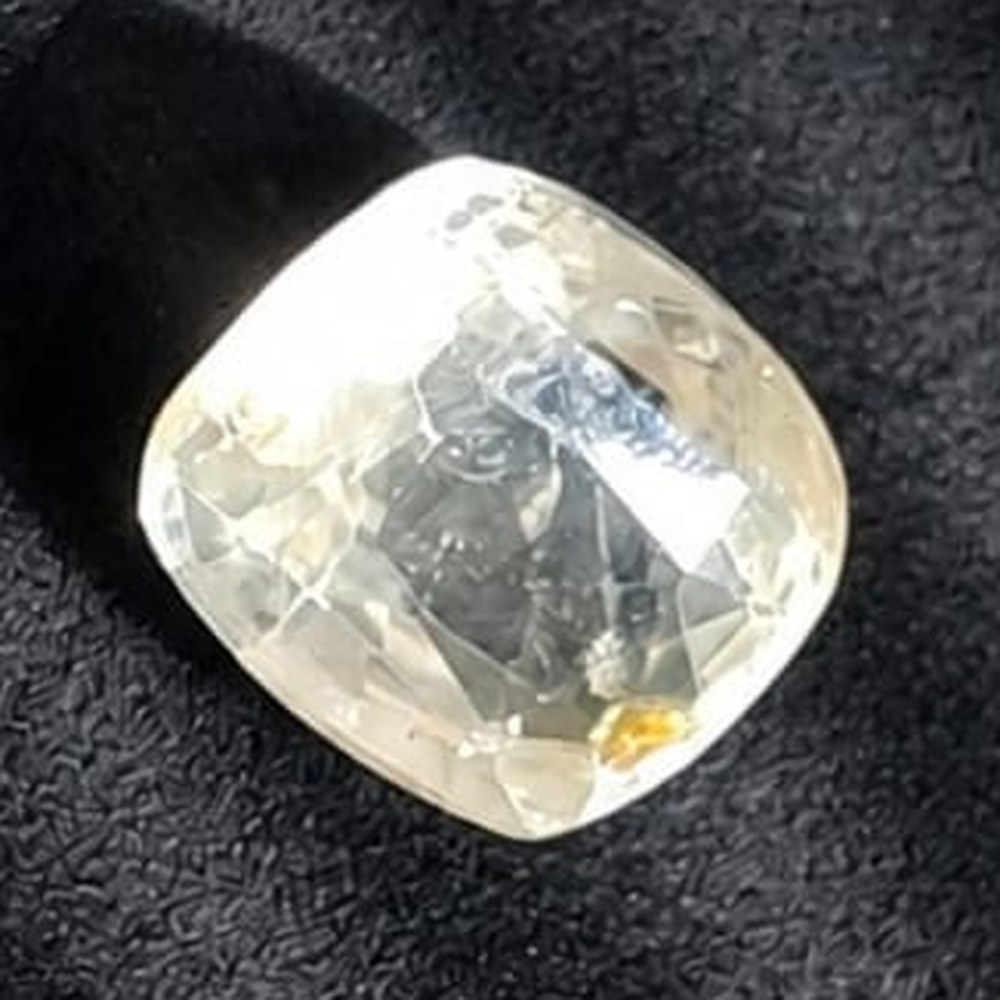
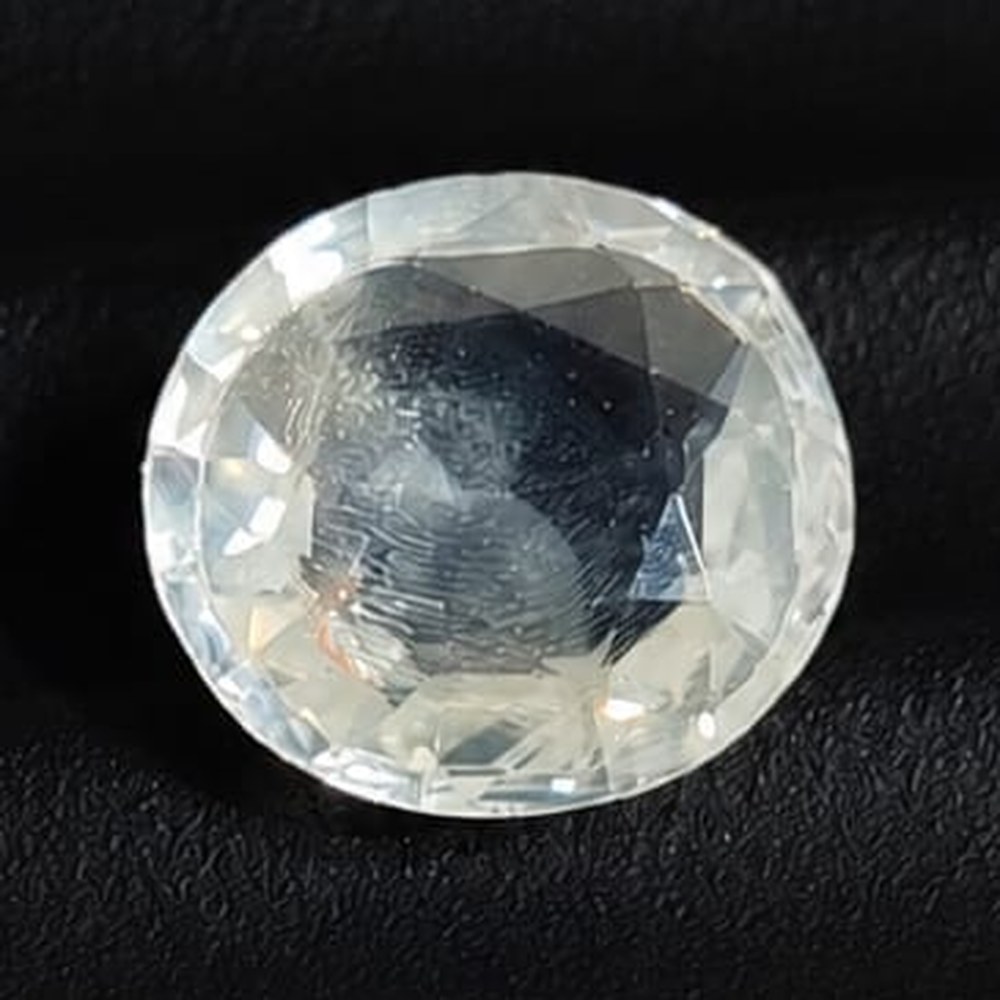
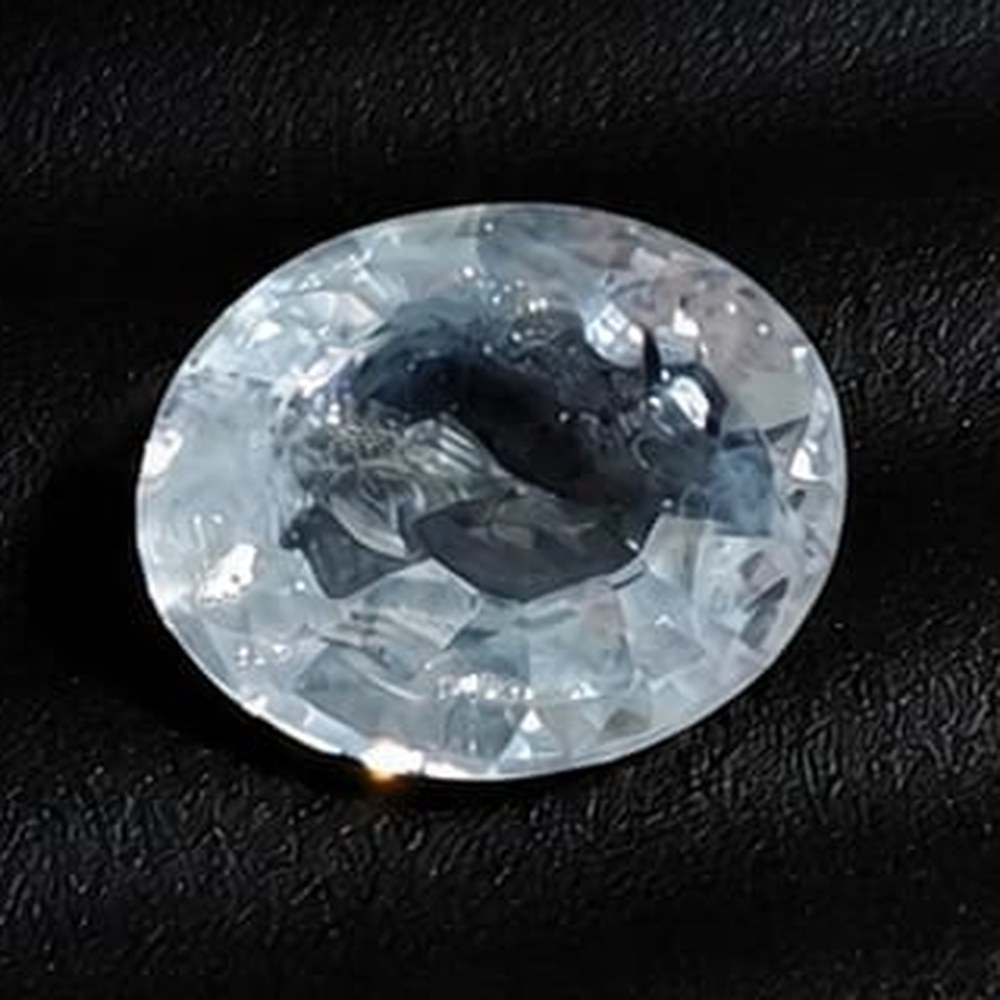
Every listed stone is one of a kind and carries its own lab report. The certificate number printed on the document in the box is the one that corresponds to the stone you receive — listing a single number here would be wrong for every other stone.
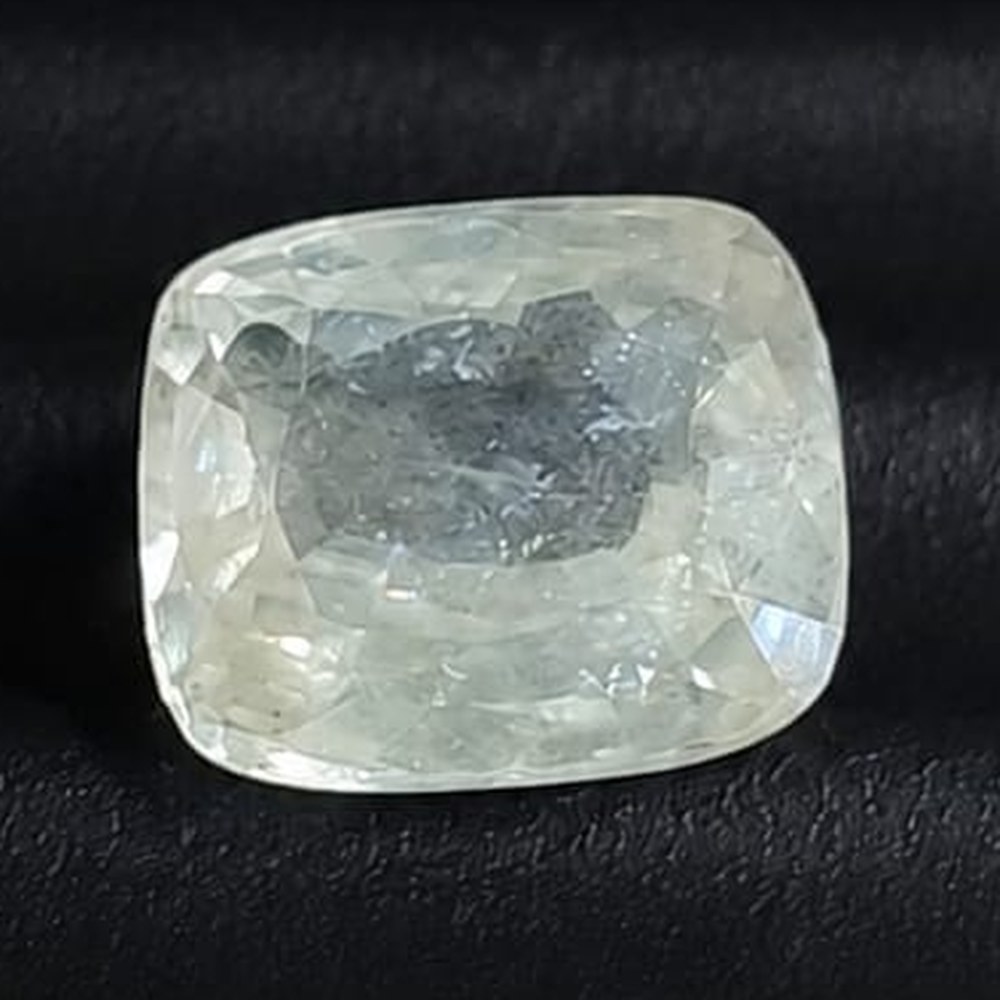
What Diamond / White Sapphire is
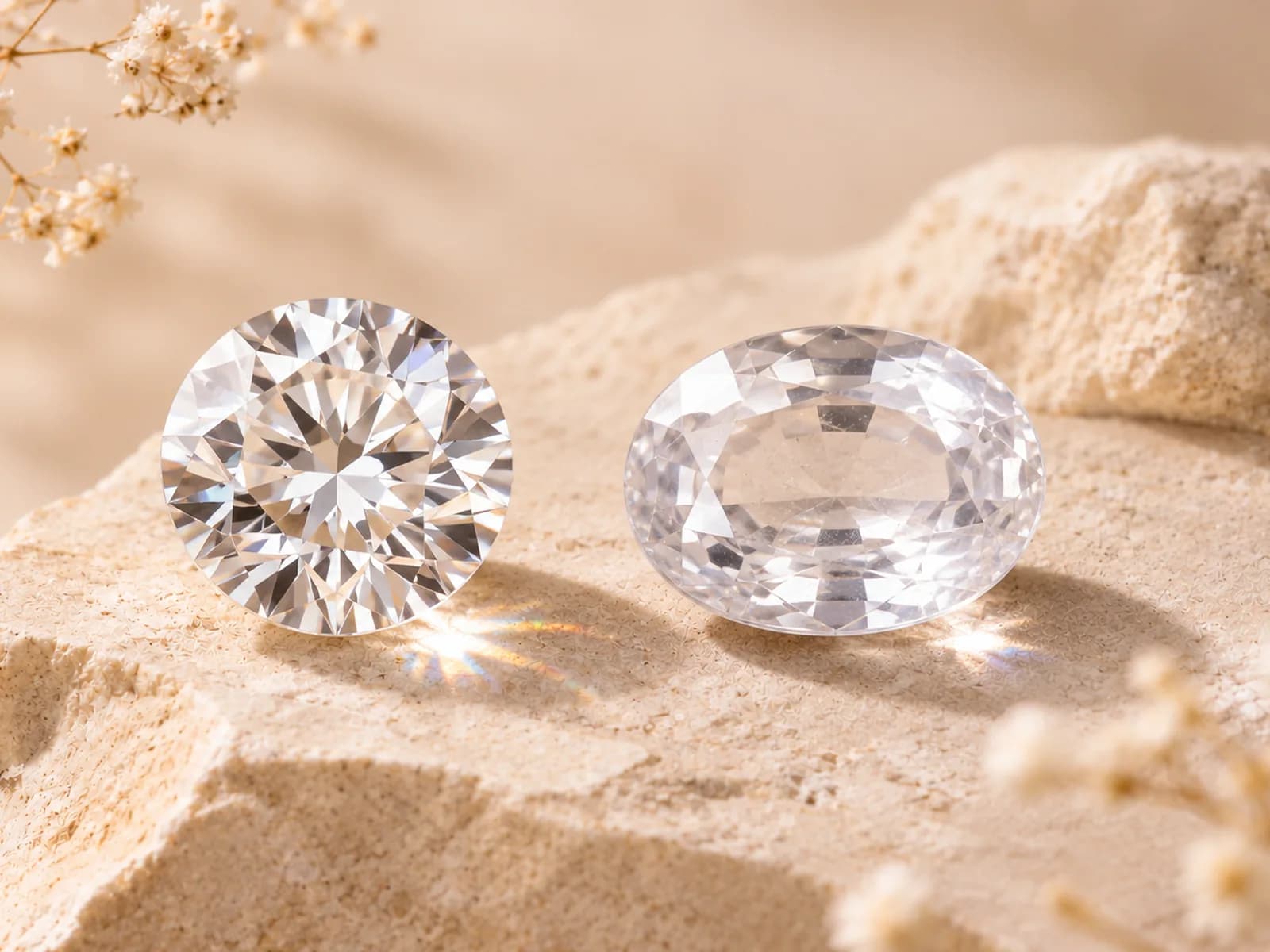
Diamond's unmatched crystal symmetry splits white light into dazzling rainbow brilliance. In Vedic astrology Heera — and its Vedic twin, white sapphire — channels Shukra, Venus: the preceptor of luxury, beauty, artistic mastery, romantic love, fertility and material comfort.
Properties
- Mineral family
- Diamond: pure crystallised carbon (C). White sapphire: colourless corundum (Al₂O₃)
- Hardness
- Diamond 10.0 Mohs · White sapphire 9.0 Mohs
- Refractive index
- Diamond 2.417 · White sapphire 1.762
- Optical property
- Extreme brilliance, adamantine lustre, full-spectrum fire
- Key origins
- Botswana, Russia, Surat (cutting) · Sri Lanka for white sapphire
- Buying standard
- Conflict-free natural diamond (SI1+, G+) or unheated eye-clean Ceylonese white sapphire
How to wear Diamond / White Sapphire
- Weight
- 0.50 – 1.50 carats (diamond) · 4 – 7 ratti (white sapphire)
- Metal
- Platinum, white gold or silver — never copper
- Finger
- Middle (Madhyama) or ring finger (Anamika)
- Day
- Friday morning, Shukla Paksha
- Mantra
- Om Dram Dreem Droum Sah Shukraya Namah (108 times)
Wearing method follows tradition. It is guidance, not a promise of any outcome — see our approach to describing stones.
Who should wear Diamond / White Sapphire
Tradition associates Diamond / White Sapphire primarily with Vrishabh (Taurus) and Tula (Libra), and beneficially with Mithun (Gemini), Kanya (Virgo), Makar (Capricorn) and Kumbh (Aquarius).
Who should not wear it
Tradition advises against Diamond / White Sapphire for Mesh (Aries), Kark (Cancer), Simha (Leo), Vrishchik (Scorpio) and Dhanu (Sagittarius). This is the section most sellers leave out. If you are unsure which rashi applies to you, our reading tool calculates it from your birth details rather than asking you to guess.
What determines the price
Price is not one number. Four things move it, and they move it a lot:
- Treatment. An untreated stone with no indications of heating can cost several times an otherwise identical heated stone. Every listing states its treatment, and the certificate records it.
- Origin. A stone from a classic source (Burma for ruby, Kashmir for blue sapphire, Ceylon for yellow sapphire) carries a premium that is real but can be overstated. The certificate names the origin only when the laboratory is confident.
- Colour and clarity. Saturation and tone first, then eye-visible inclusions. A stone with fine colour and a visible inclusion usually beats a clean stone with flat colour.
- Weight. Price per carat rises steeply with size, so a 4 ct stone costs more than twice a 2 ct stone of the same quality.
Live prices for what is currently available are shown above — we do not publish a per-carat rate, because quoting one would be wrong for most stones.
Worth knowing
Forged 150 km Underground
Natural diamonds formed 1 to 3 billion years ago at depths of 150+ km under crushing pressure and temperatures above 1,000°C.
Delivered by Ancient Volcanoes
Diamonds reached the surface only via supersonic volcanic eruptions called kimberlite pipes — none of which have erupted in modern history.
India Was the World's Only Source
Until the 1720s, India's Golconda mines were the only source of diamonds on Earth, giving the world the Koh-i-Noor, Hope and Darya-i-Noor.