Gemstone
Turquoise (Firoza Stone)
The sky-blue stone of Jupiter and Venus — protection and grace.
5 pieces in stock now, from ₹1,455.
Buy Turquoise online
Every listed stone is one of a kind and carries its own lab report. The certificate number printed on the document in the box is the one that corresponds to the stone you receive — listing a single number here would be wrong for every other stone.
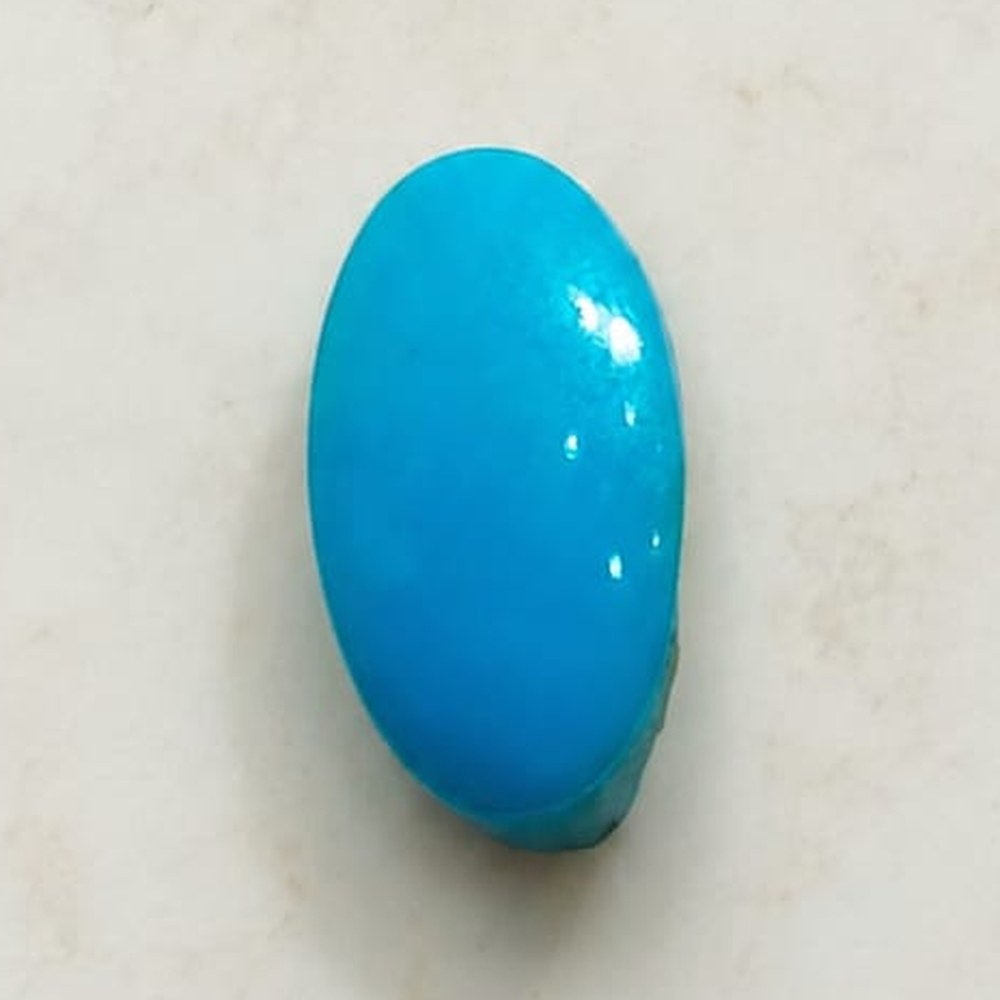
What Turquoise is
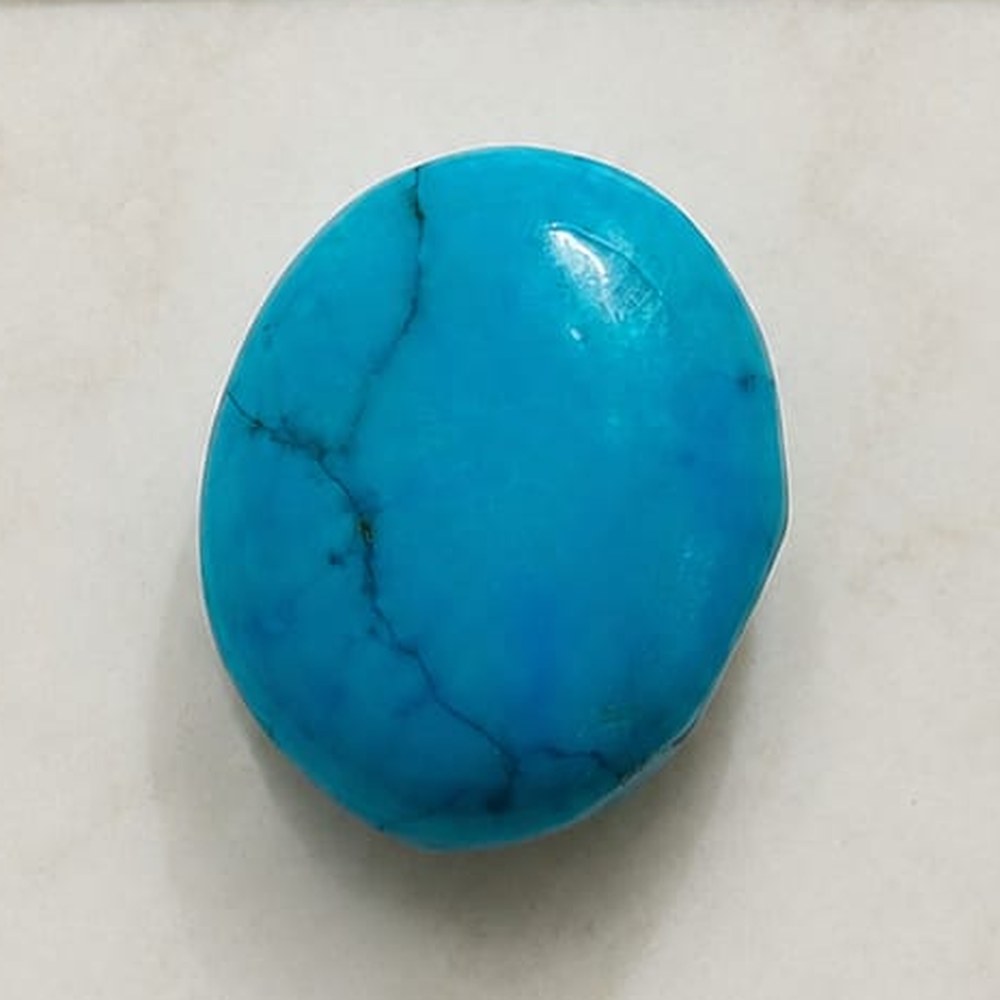
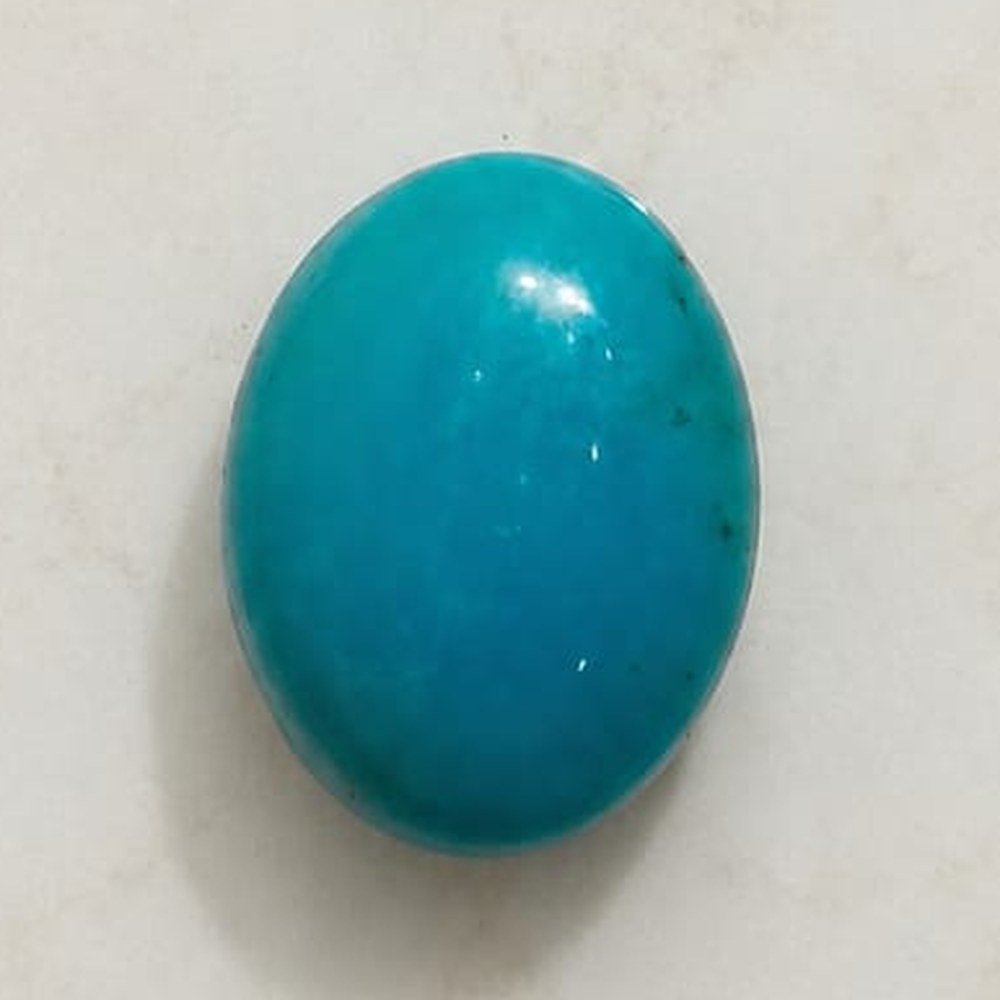
Revered across Indian, Tibetan and Sufi traditions, Firoza blends the wisdom of Jupiter with the grace of Venus. It is traditionally believed to absorb negative energy and warn the wearer of impending harm by subtly shifting colour.
Properties
- Composition
- Hydrated copper aluminium phosphate (CuAl₆(PO₄)₄(OH)₈·4H₂O)
- Hardness
- 5.0 – 6.0 Mohs
- Refractive index
- 1.61 – 1.65
- Key origins
- Nishapur (Iran), Tibet, Arizona
- Buying standard
- Natural untreated stone; beware stabilised or dyed 'chalk' turquoise
How to wear Turquoise
- Weight
- 6 to 10 ratti
- Metal
- Silver or panchdhatu
- Finger
- Index or ring finger
- Day
- Thursday or Friday
Wearing method follows tradition. It is guidance, not a promise of any outcome — see our approach to describing stones.
Who should wear Turquoise
Tradition associates Turquoise primarily with Dhanu (Sagittarius) and Meen (Pisces), and beneficially with Kumbh (Aquarius).
What determines the price
Price is not one number. Four things move it, and they move it a lot:
- Treatment. An untreated stone with no indications of heating can cost several times an otherwise identical heated stone. Every listing states its treatment, and the certificate records it.
- Origin. A stone from a classic source (Burma for ruby, Kashmir for blue sapphire, Ceylon for yellow sapphire) carries a premium that is real but can be overstated. The certificate names the origin only when the laboratory is confident.
- Colour and clarity. Saturation and tone first, then eye-visible inclusions. A stone with fine colour and a visible inclusion usually beats a clean stone with flat colour.
- Weight. Price per carat rises steeply with size, so a 4 ct stone costs more than twice a 2 ct stone of the same quality.
Live prices for what is currently available are shown above — we do not publish a per-carat rate, because quoting one would be wrong for most stones.
Worth knowing
The Word Means Turkish
Named after French pierre turquoise ('Turkish stone') because Persian Firoza reached Europe via Turkish Silk Road traders.
Over 6,000 Years of Royal Wear
Archaeologists found turquoise bracelets still on the mummified arm of Egyptian Queen Zer from 5,500 BCE — among the world's oldest surviving jewellery.
A Modern Cultural Phenomenon
In contemporary India, Firoza became widely recognised through a well-known silver-and-turquoise bracelet worn by a Bollywood actor.